0975 721 441
 info@ailogisticsvn.com


Dong Nai Develops Multimodal Logistics Zones Integrated with Long Thanh Airport City
Thien An
22/01/2026, 11:07
The establishment of Long Thanh International Airport is ushering in a new development phase for Dong Nai, spanning aviation, economic spatial organization, urban planning, and logistics. Dong Nai Province has identified the "airport city" model as its strategic direction, in which multimodal logistics zones play a pivotal role, connecting the airport with transportation networks and the production-service chains of the entire Southeast region.

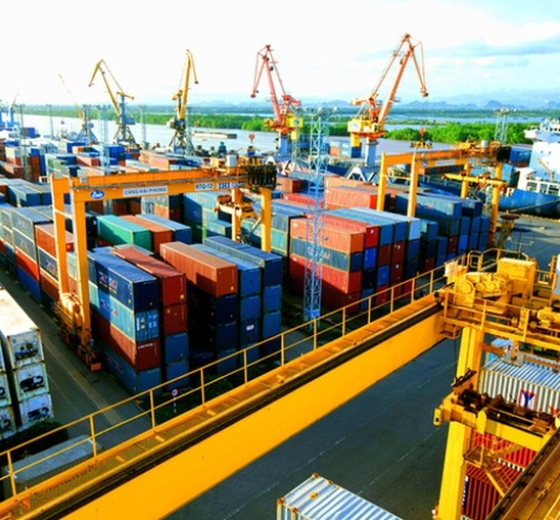
Đồng Nai có lợi thế thu hút các dự án về logistics. Trong ảnh: Bốc xếp hàng hóa tại cảng Đồng Nai. Ảnh: P.Tùng
The logistics space integrated with Long Thanh Airport City is envisioned as a new transshipment and distribution hub. It serves as a foundation for Dong Nai to restructure its growth model, shifting from pure industrial development to a service-based economy, logistics, and high-value-added industries.
MULTIMODAL LOGISTICS IN THE AIRPORT CITY PLANNING STRUCTURE
According to the planning orientation announced by Dong Nai Province (the General Planning Project for Long Thanh Urban Area to 2045), Long Thanh spans over 43,000 hectares and is organized into five functional subdivisions. In this structure, the multimodal logistics zone is not an isolated entity but is closely integrated with the airport area and key external transport axes, forming an "air - road - rail - sea" connectivity network.
These five subdivisions include:
-
The Airport Center: The "heart" of the city, handling massive flows of goods and passengers.
-
The Urban Core: Featuring financial towers, banking hubs, and 5-star hotels catering to global experts.
-
The High-Tech Industrial Belt: Attracting investment in emerging sectors such as semiconductors, pharmaceuticals, and green technology.
-
The Multimodal Logistics Zone.
-
The Eco-Tourism and Resort Area: Capitalizing on the beauty of the Dong Nai River, Cau Moi Lake, and Da Vang Lake.
This approach reflects the local perspective of treating logistics as a central component of the airport city, rather than just supporting infrastructure for air transport. Integrated spatial organization allows for the simultaneous exploitation of Long Thanh Airport, regional highways, belt roads, and future rail connections.
According to analysis from Dong Nai’s specialized agencies, the airport-linked multimodal logistics zone will coordinate cargo flows, easing pressure on traditional logistics centers. It will facilitate high-value services such as air cargo, regional distribution centers, cold chain logistics, and e-commerce logistics—sectors in high demand as Dong Nai integrates deeper into global supply chains.
NEW GROWTH ENGINE FROM A LOCAL PERSPECTIVE
From Dong Nai's viewpoint, Long Thanh Airport City is not merely a spatial planning project but a driver for development over the next decade.
According to the Dong Nai Department of Construction, Long Thanh Airport is the nucleus for restructuring the local economic space, creating a new growth pole alongside traditional industrial parks. Multimodal logistics will bridge the airport and the region's seaport system, particularly deep-water ports in the Southeast. Efficient air-sea connectivity is expected to enhance Dong Nai’s logistics competitiveness and reduce transport costs for import-export enterprises.
Beyond infrastructure, Dong Nai aims to develop logistics zones that are modern, green, and smart. This involves synchronizing transport planning, land use, and technical infrastructure to avoid fragmented development.
By 2030, Long Thanh Airport City aims to meet Grade II urban standards, with a population potentially exceeding 1.5 million by 2045. In this context, logistics will serve not only production but also urban consumption, tourism, and international trade. The simultaneous development of logistics and urban functions is considered the decisive factor for the sustainability of the airport city model.
Source: vneconomy.vn