0975 721 441
 info@ailogisticsvn.com


The 2026 import and export tariff schedule is an important legal basis for businesses to determine their tax obligations when carrying out import and export activities. Compared to previous years, the 2026 tariff schedule includes many important adjustments. Let's explore the details in the article below!

1. Structure of the 2026 Import and Export Tariff Schedule
The 2026 import and export tariff schedule is compiled as an Excel file, designed for optimal ease of reference and practical application. A key feature of the schedule is its ability to fully integrate tax data and management policies directly related to each product code.
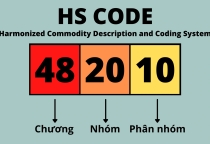
The list of goods in the tariff schedule is updated according to Circular 31/2022/TT-BTC, ensuring consistency with the Harmonized System of Description and Coding of Goods (HS). Each item is classified according to an 8- or 10-digit HS code, which is a mandatory basis for determining the tax rate and accompanying legal procedures.

Regarding the tax rate system, the 2026 import and export tariff schedule fully integrates the 32 currently applied tariff schedules, including:
- Normal import duties and Most Favored Nation (MFN) import duties;
- Preferential import duties under free trade agreements such as EVFTA, CPTPP, RCEP, and other bilateral FTAs;
- Indirect taxes related to imported and exported goods include export tax, value-added tax (VAT), special consumption tax (SCT), and environmental protection tax (EPT).
A key strength of the 2026 tariff schedule is the integration of specialized management policies. Approximately 100 management policies from various ministries and agencies (quality control, quarantine, licensing, import conditions, etc.) are directly assigned to nearly 8,000 HS codes. This allows businesses not only to look up tariff rates but also to understand the legal procedures required for each product.
2. Some important changes in the 2026 Import and Export Tariff Schedule
The year 2026 will see several significant adjustments to tax policies, directly impacting the import and export activities of businesses.
First, excise tax rates will begin to increase significantly starting January 1, 2026. According to the new regulations, items that are harmful to health, such as alcohol and beer, will be subject to higher excise tax rates. For alcoholic beverages with an alcohol content of 20 degrees or higher, the tax rate can range from 65% to 70% , depending on the specific product category. This is a factor that businesses need to pay special attention to when planning the import or distribution of goods subject to excise tax.

Next, the export tax on cement clinker was adjusted upwards according to Decree No. 108/2025/ND-CP. This amendment aims to protect domestic mineral resources, limit the export of raw materials, and create balance in cement production and export activities.
In addition, the government is consolidating many tariff lines with similar tax rates. Merging HS codes with the same tax rate simplifies the 2026 Customs Tariff Schedule, reduces the pressure of checking product names, and limits disputes during the goods classification process.
Regarding the tariff reduction roadmap under FTAs, 2026 is a crucial milestone when many tariff lines in the EVFTA and CPTPP officially reach 0% or are significantly reduced, corresponding to the 6th or 7th year of the agreements. Importing businesses need to carefully check the origin of goods to take advantage of tariff preferences.
Regarding Value Added Tax (VAT), the policy continues to be flexible. Some product groups are still subject to an extended 2% VAT reduction until December 31, 2026, as stipulated in Decree 174/2025/ND-CP. However, the VAT column in the tax schedule usually shows the standard tax rate (10% or 5%), so businesses need to refer to the relevant tax reduction decrees still in effect in 2026 to ensure correct application and avoid under- or over-declaration of tax.
Furthermore, the HS code structure has been updated, adding new sub-categories to detail high-tech goods and environmentally friendly products. Customs authorities are also tightening the application of HS codes to sensitive product groups such as functional foods, complete machinery and production lines, and chemicals. The use of detailed explanatory notes accompanying the tariff schedule is crucial to reducing the risk of being subjected to unfair tariff assessments.
3. How to look up tariff schedules and calculate import and export taxes in 2026
The 2026 Import and Export Tariff Schedule is a comprehensive table of tax rates stipulated by the State for calculating taxes on exported and imported goods. Tax rates in the schedule are presented in two forms: percentage tax rates (%) and absolute tax rates.

Details › Import and Export Tariff Schedule 2026 (Excel file) sourced from the Customs Sub-Department of Region VIII, updated on January 7, 2026.
Businesses can look up tax schedules in several different ways:
- Search by chapter and subchapter of the HS Code;
- Search by function or product characteristics;
- Search by quality and composition;
- Look up the HS code directly. Once the 8-digit or 10-digit HS code is determined, businesses only need to compare it with the corresponding tax rate column for the country of origin to determine the applicable tax rate.
When consulting tax schedules, businesses need to regularly update new legal documents, accurately identify the HS code and relevant FTA agreements to apply the correct tax rate.
Regarding tax calculation, the basic formulas applied are as follows:
- Import tax = Taxable value of imported goods × Import tax rate
- Excise tax = Excise tax rate × (Taxable value of imported goods + Import tax)
- Environmental protection tax = Absolute environmental protection tax rate × Quantity of goods
- Value Added Tax = (Import Taxable Price + Import Tax + Special Consumption Tax + Environmental Protection Tax) × VAT Rate
The 2026 import and export tariff schedule brings about many important changes, requiring businesses to proactively update and apply the regulations correctly. Accurately looking up HS codes, understanding tax policies, and effectively utilizing FTA preferences will help businesses comply with the law, control costs, and enhance competitiveness in the context of increasingly volatile international trade.
Source: ecus.vn