0975 721 441
 info@ailogisticsvn.com


|
NATIONAL ASSEMBLY |
SOCIALIST REPUBLIC OF VIETNAM |
|
Number: 54/2014/QH13 |
Hanoi, June 23, 2014 |
Based on the Constitution of the Socialist Republic of Vietnam ;
The National Assembly enacted the Customs Law.
Article 1. Scope of application
This law regulates state management of customs for goods exported, imported, and transited, as well as means of transport entering, exiting, and transiting the customs territory of domestic and foreign organizations and individuals; and the organization and operation of Customs.
Article 2. Scope of Application
1. Organizations and individuals engaged in the export, import, and transit of goods, as well as the exit, entry, and transit of transport vehicles.
2. Organizations and individuals have rights and obligations related to the export, import, and transit of goods, as well as the exit, entry, and transit of transport vehicles.
3. Customs authorities and customs officers.
4. Other State agencies involved in coordinating State management of customs.
1. The Vietnamese State creates favorable customs conditions for export, import, exit, entry, and transit through Vietnamese territory.
2. To build a clean, strong, professional, modern Vietnamese Customs service that operates transparently, effectively, and efficiently.
In this Law, the following terms are understood as follows:
1. Transferring goods or means of transport that are subject to customs inspection and supervision is the process of moving goods or means of transport from one customs clearance location to another.
2. Transshipment refers to the process of transferring goods from domestic or incoming transport vehicles to outgoing transport vehicles for export, or from domestic or incoming transport vehicles to warehouses or yards within the border area, and then loading them onto other transport vehicles for export.
5. Customs supervision is an operational measure applied by customs authorities to ensure the integrity of goods, compliance with legal regulations in the preservation, storage, loading, unloading, transportation, and use of goods, as well as the entry, exit, and transit of means of transport subject to customs management.
8. Customs documents include the customs declaration form and other documents that must be submitted or presented to the customs authority as prescribed by this Law.
9. A bonded warehouse is a warehouse used to store imported raw materials and supplies that have been cleared through customs but have not yet paid taxes, for the production of goods for export by the bonded warehouse owner.
11. Customs control refers to patrol, investigation, verification, or other operational measures applied by customs authorities to prevent and combat smuggling, illegal transportation of goods across borders, and other acts violating customs laws.
13. Customs territory comprises areas within the territory, exclusive economic zone, and continental shelf of the Socialist Republic of Vietnam where the Customs Law is applied.
15. Customs sealing is the use of technical tools or markings to identify and ensure the integrity of goods.
17. Means of transport include road, rail, air, sea, and inland waterway transport for entry, exit, and transit.
18. Risk management is the application by customs authorities of a system of measures and operational procedures to identify, assess, and classify risk levels, as a basis for allocating and arranging resources appropriately to effectively inspect, supervise, and support other customs operations.
19. Risk refers to the potential for non-compliance with customs laws in the export, import, and transit of goods; and the entry, exit, and transit of transport vehicles.
22. Customs information includes information and data on export, import, exit, entry, and transit activities; organizations and individuals participating in export, import, exit, entry, and transit activities; and other information related to customs operations.
24. Customs value is the value of exported and imported goods used for tax calculation and customs statistics purposes.
26. Pre-determination of customs code, origin, and customs value is the process by which the customs authority determines the customs code, origin, and customs value of goods before customs clearance procedures are carried out.
Article 5. Application of international treaties, customs and practices relating to customs.
1. In the event that an international treaty to which the Socialist Republic of Vietnam is a party contains provisions different from those of this Law, the provisions of that international treaty shall apply.
2. In cases where this Law, other Vietnamese legal documents, or international treaties to which the Socialist Republic of Vietnam is a party do not contain provisions, international customs and practices relating to customs may be applied, provided that such application does not contravene the fundamental principles of Vietnamese law.
Article 6. International cooperation activities in customs matters
1. International cooperation activities in customs include:
a) Negotiating, signing, and implementing international treaties and agreements on customs;
b) To organize the exploitation, exchange of information and professional cooperation with customs authorities of other countries and relevant international organizations;
c) Sending Vietnamese customs officials abroad and receiving foreign customs officials in Vietnam to carry out customs operations in accordance with customs laws, international treaties to which the Socialist Republic of Vietnam is a party, or signed international agreements;
d) To exercise the rights, obligations, and interests of the Vietnamese State within the World Customs Organization, relevant international customs organizations, and other countries and territories.
2. Vietnamese Customs is responsible for carrying out the activities mentioned in Clause 1 of this Article in accordance with the law.
Article 7. Customs operational area
1. The customs operational area includes:
a) Areas at land border crossings, international railway stations, international civil airports; seaports, inland waterway ports with export, import, exit, entry, and transit activities; areas where goods under customs supervision are stored, export processing zones, customs preferential zones; locations for customs procedures, bonded warehouses, tax-exempt warehouses, international post offices, and offices of customs declarants during post-clearance inspections; locations for inspecting export and import goods within customs territory;
b) Other areas and locations that meet the requirements of state management and are permitted to export, import, and transit goods, as well as to enter, exit, and transit transport vehicles, as decided by the Prime Minister.
3. The government shall specify in detail the geographical scope of customs operations.
Article 8. Modernization of customs management
1. The State prioritizes investment in modern technical equipment, facilities, and advanced technologies to ensure effective customs management; encourages organizations and individuals to participate in the development of advanced technologies and technical means to ensure the application of modern customs management methods. Organizations and individuals engaged in export and import activities are responsible for participating in the development and implementation of electronic transactions and electronic customs procedures.
2. Technical standards for electronic data exchange and the legal validity of electronic documents in the implementation of electronic customs procedures as prescribed by law on electronic transactions.
Article 9. Coordination in the implementation of customs laws
1. The customs authority is responsible for leading and coordinating closely with relevant state agencies, organizations, and people's armed forces units in implementing customs laws.
2. State agencies, relevant organizations, and people's armed forces units, within the scope of their duties and powers, are responsible for coordinating and creating conditions for customs agencies to fulfill their tasks.
Article 10. Prohibited acts in the customs field
1. For customs officers:
a) Causing inconvenience or difficulties in customs procedures;
b) Concealing or colluding to smuggle or illegally transport goods across the border, engaging in trade fraud, or tax evasion;
c) Receiving bribes, misappropriating or embezzling seized goods, or committing other acts for personal gain;
d) Other acts that violate customs laws.
2. For customs declarants, organizations, and individuals with rights and obligations related to the export, import, and transit of goods, and the exit, entry, and transit of means of transport:
a) Committing fraudulent acts in customs clearance procedures;
b) Smuggling and illegal transportation of goods across the border;
c) Commercial fraud, tax evasion;
d) Giving bribes or engaging in other acts for the purpose of obtaining illicit gain;
d) Obstructing customs officers from performing their duties;
e) Unauthorized access to, falsification of, or destruction of customs information systems;
g) Other acts that violate customs laws.
Article 11. Supervision of the implementation of customs laws.
1. The National Assembly and People's Councils at all levels, within the scope of their functions, duties, and powers, shall supervise the implementation of laws on customs.
2. The Vietnam Fatherland Front and its member organizations shall mobilize the people to strictly comply with customs laws; and supervise the implementation of customs laws.
3. When performing their duties and exercising their powers, customs agencies and customs officers must comply with the law, rely on the people, and be subject to the supervision of the people.
DUTIES AND ORGANIZATION OF CUSTOMS
The Vietnamese Customs is responsible for inspecting and supervising goods and means of transport; preventing and combating smuggling and illegal transportation of goods across borders; organizing the implementation of tax laws on exported and imported goods; compiling statistics on exported and imported goods as prescribed by this Law and other relevant laws; and proposing policies and measures for state management of customs regarding export, import, exit, entry, transit activities, and tax policies on exported and imported goods.
Article 13. Principles of organization and operation of Customs
1. Vietnamese customs are organized and operate according to the principles of centralization and uniformity.
2. The Director General of the General Department of Customs uniformly manages and directs the operations of customs at all levels; lower-level customs offices are under the management and direction of higher-level customs offices.
Article 14. Customs Organization System
1. The organizational structure of Vietnam Customs includes:
a) General Department of Customs;
b) Provincial, inter-provincial, and centrally-administered city Customs Departments;
c) Customs Sub-departments, Customs Control Teams, and equivalent units.
1. Customs officers are individuals who meet the qualifications for recruitment and appointment to ranks, positions, and titles within customs agencies; who receive training, professional development, and are managed and utilized in accordance with the law on cadres and civil servants.
CUSTOMS PROCEDURES, CUSTOMS INSPECTION AND SUPERVISION REGIME
Article 16. Principles for conducting customs procedures, customs inspection and supervision.
4. Customs procedures must be carried out transparently, quickly, conveniently, and in accordance with the law.
5. The allocation of personnel and working hours must meet the requirements of export, import, exit, entry, and transit operations.
Article 17. Risk management in customs operations
1. Customs authorities apply risk management to decide on customs inspection and supervision of goods and means of transport; and support activities to prevent and combat smuggling and illegal transportation of goods across borders.
3. Customs authorities manage and utilize business information systems to automatically integrate and process data for the application of risk management in customs operations.
4. The Minister of Finance shall prescribe criteria for evaluating the legal compliance of customs declarants, classifying risk levels, and applying risk management in customs operations.
Article 18. Rights and obligations of the customs declarant
1. The customs declarant has the right to:
a) To receive information from customs authorities regarding customs declarations for goods and means of transport, guidance on customs procedures, and dissemination of customs laws;
b) Request the customs authority to pre-determine the customs code, origin, and customs value of the goods after providing complete and accurate information to the customs authority;
d) Request the customs authority to re-inspect the goods that have already been inspected, if you disagree with the customs authority's decision in cases where the goods have not yet been cleared through customs;
d) Using customs documents to clear goods, transport goods, and carry out related procedures with other agencies as prescribed by law;
e) Filing complaints and denunciations against unlawful acts of customs authorities and customs officials;
g) Claim for compensation for damages caused by customs authorities or customs officers in accordance with the law on the State's liability for compensation.
a) Declare customs and complete customs procedures in accordance with the provisions of this Law;
d) Implementing decisions and requests of customs authorities and customs officers in customs procedures, inspection, and customs supervision of goods and means of transport;
d) Retain customs records for goods that have been cleared for a period of 05 years from the date of registration of the customs declaration, except where the law provides otherwise; retain accounting books, documents and other documents related to exported and imported goods that have been cleared for the period prescribed by law; present records and provide relevant information and documents when requested by the customs authority for inspection as prescribed in Articles 32, 79 and 80 of this Law ;
e) Arrange for personnel and resources to carry out the necessary tasks so that customs officers can conduct physical inspections of goods and means of transport;
3. The customs declarant is a customs clearance agent, or another person authorized by the owner of the goods or the owner of the means of transport to perform the obligations stipulated in points a, b, c, d, e, and g of Clause 2 of this Article within the scope of authorization. The customs declarant is the driver of the means of transport performing the obligations stipulated in points a, c, d, e, and g of Clause 2 of this Article.
Article 19. Duties and powers of customs officers
1. Strictly comply with the law and customs procedures, and be responsible for the performance of their duties and responsibilities.
2. Provide guidance to customs declarants, organizations, and individuals involved upon request.
4. Taking samples of goods in the presence of the customs declarant for analysis or expert examination by the customs authority to support customs inspection.
5. Require the customs declarant to provide information and documents related to the goods in order to correctly determine the customs code, origin, and customs value of the goods.
6. Require the commander and driver of the transport vehicle to follow the correct route, adhere to the schedule, and stop at the designated locations.
7. Other duties and powers as prescribed by law.
Article 20. Customs Clearance Agents
1. Conditions for becoming a customs clearance agent:
a) Possess a Business Registration Certificate or Enterprise Registration Certificate with the business line of freight forwarding services or customs clearance agency services;
b) There are customs clearance agents available;
2. Customs clearance agents must be Vietnamese citizens who meet the following conditions:
a) Possess a college degree or higher in economics, law, engineering;
b) Possess a customs declaration professional certificate;
c) The customs authority has issued a customs clearance agent employee code.
3. The Director General of the General Department of Customs decides on the recognition, suspension, and termination of customs brokerage activities; the issuance of customs declaration professional certificates; and the issuance and revocation of customs brokerage employee codes.
4. Customs brokers and their employees exercise the rights and obligations of the customs declarant as stipulated in Article 18 of this Law .
Article 21. Customs procedures
1. When carrying out customs procedures, the customs declarant is responsible for:
a) Declare and submit customs declarations; submit or present documents belonging to the customs dossier as prescribed in Article 24 of this Law ;
b) Bring the goods and means of transport to the designated location for physical inspection of the goods and means of transport;
2. When carrying out customs procedures, the customs authority and customs officers have the following responsibilities:
a) Receiving and registering customs documents;
b) Checking customs documents and conducting physical inspection of goods and means of transport;
c) To collect taxes and other revenues in accordance with the law on taxes, fees, charges and other relevant legal regulations;
d) Deciding on the customs clearance and release of goods, and confirming that the means of transport has completed customs procedures.
Article 22. Location for customs clearance procedures
1. The customs clearance location is where the customs authority receives, registers, and examines customs documents, and conducts physical inspections of goods and means of transport.
2. The locations for receiving, registering, and checking customs documents are the headquarters of the Customs Department and the headquarters of the Customs Sub-department.
3. Locations for physical inspection of goods include:
a) Inspection locations include land border crossings, international railway stations, international civil airports; international post offices; seaports and inland waterway ports with export, import, exit, entry, and transit activities; and inland ports for exporting and importing goods.
b) The headquarters of the Customs Sub-department;
c) Centralized inspection locations as decided by the Director General of the General Department of Customs;
d) Inspection locations at production facilities, construction sites; and venues for fairs and exhibitions;
d) Inspection locations in bonded warehouses, tax-exempt warehouses, and consolidation points for less-than-container-load (LCL) cargo;
e) Joint inspection locations between Vietnamese Customs and the Customs of neighboring countries at land border crossings;
Article 23. Time limit for customs authorities to carry out customs procedures.
1. The customs authority shall receive, register, and examine customs documents immediately after the customs declarant submits or presents the customs documents as prescribed by this Law.
2. After the customs declarant has fully complied with the requirements for customs clearance as stipulated in points a and b of Clause 1, Article 21 of this Law , the time limit for customs officers to complete the document review and physical inspection of goods and means of transport is prescribed as follows:
b) The physical inspection of goods must be completed no later than 8 working hours from the time the customs declarant presents all goods to the customs authority. In cases where the goods are subject to specialized inspection regarding quality, health, culture, animal and plant quarantine, or food safety as prescribed by relevant laws, the deadline for completing the physical inspection is calculated from the time the results of the specialized inspection are received as stipulated.
In cases where the shipment is large in quantity, contains many types of goods, or the inspection is complex, the head of the customs agency where the customs procedures are carried out shall decide on extending the time for physical inspection of the goods, but the maximum extension period shall not exceed 02 days;
c) The inspection of transport vehicles must ensure the timely loading and unloading of export and import goods, the departure and arrival of passengers, and the customs inspection and supervision as prescribed by this Law.
3. The customs clearance of goods shall be carried out in accordance with the provisions of Article 37 of this Law .
1. Customs documents include:
a) Customs declaration form or document replacing the customs declaration form;
b) Relevant documents.
Depending on the specific case, the customs declarant must submit or present the sales contract, commercial invoice, transport documents, certificate of origin, export/import license, notification of inspection results or exemption from specialized inspection, and other documents related to the goods as prescribed by relevant laws.
3. Customs documents are submitted and presented to the customs authority at the customs office.
Article 25. Deadline for submitting customs documents
1. The deadline for submitting customs declarations is as follows:
a) For exported goods, payment must be made after the goods have been assembled at the location notified by the customs declarant and no later than 4 hours before the means of transport departs; for exported goods sent by express delivery service, the payment must be made no later than 2 hours before the means of transport departs;
b) For imported goods, payment must be made before the goods arrive at the border gate or within 30 days from the date the goods arrive at the border gate;
c) The deadline for submitting customs declarations for means of transport shall be in accordance with the provisions of Clause 2, Article 69 of this Law .
3. The deadline for submitting relevant documents included in the customs dossier is stipulated as follows:
a) In the case of electronic customs declaration, when the customs authority conducts a review of the customs dossier or a physical inspection of the goods, the customs declarant shall submit the paper documents belonging to the customs dossier, except for those documents already available in the national single window information system;
b) In the case of submitting a paper customs declaration, the declarant must submit or present the relevant documents when registering the customs declaration.
Article 26. Classification of goods
1. Goods classification is necessary to determine the commodity code as a basis for calculating taxes and implementing goods management policies. When classifying goods, it is necessary to base the classification on customs documents, technical documents, and other information related to exported and imported goods to determine the name and code of the goods according to the Vietnamese Export and Import Commodity Classification List.
2. The Vietnamese export and import commodity catalog includes the commodity code, name, description, unit of measurement, and accompanying explanations.
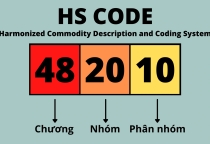
3. The Vietnamese export and import commodity list is built on the basis of fully applying the International Convention on the Harmonized System of Description and Coding of Goods .
5. When conducting customs inspections, the customs authority determines the commodity code based on the customs documents, the results of the physical inspection of the goods, or the results of analysis and assessment of the goods. If the customs authority does not accept the commodity code declared by the customs declarant, it has the right to take samples of the goods in the presence of the declarant for analysis, request expert assessment, and determine the commodity code for those goods; if the declarant disagrees with the classification result of the customs authority, they have the right to appeal or file a lawsuit in accordance with the law.
Article 27. Determination of Origin of Goods
1. For exported goods:
a) The customs authority determines the origin of exported goods based on examining the contents of the customs declaration, the documents in the customs dossier, and the results of the physical inspection of the goods;
b) In case of doubt regarding the origin of exported goods, the customs authority shall request the customs declarant to provide documents and materials related to the origin of the exported goods, and conduct an inspection and verification of the origin of the goods at the production facility of the exported goods. While awaiting the results of the inspection and verification of the origin of the goods, the exported goods shall be cleared in accordance with the provisions of Article 37 of this Law .
2. For imported goods:
b) In cases of doubt regarding the origin of imported goods, the customs authority shall conduct an inspection and verification of the origin of the goods in the country of production in accordance with international treaties to which the Socialist Republic of Vietnam is a party. The results of the inspection and verification of origin shall have legal validity in determining the origin of imported goods.
While awaiting the results of the origin verification, imported goods are cleared in accordance with Article 37 of this Law , but are not entitled to special preferential tax rates. The official tax payable will be based on the results of the origin verification.
Article 28. Pre-determination of customs code, origin, and customs value
1. In cases where the customs declarant requests the customs authority to pre-determine the HS code, origin, and customs value of goods intended for export or import, the customs declarant shall provide relevant information, documents, and samples of the goods intended for export or import to the customs authority for pre-determination of the HS code, origin, and customs value.
If it is not possible to provide samples of the goods intended for export or import, the customs declarant must provide technical documents related to those goods.
2. The customs authority shall, based on the provisions of law on goods classification, origin, customs value, and related information and documents provided by the customs declarant, pre-determine the customs code, origin, and customs value, and notify the customs declarant in writing of the pre-determination results. If there is insufficient basis or information to make the determination as requested by the customs declarant, the customs authority shall notify the customs declarant or request additional relevant information and documents.
3. Within 60 days from the date of the written notification of the pre-determination results, if the customs declarant disagrees with the pre-determination results, they have the right to request the customs authority to review the pre-determination results. The customs authority is responsible for reviewing and responding to the customs declarant within the prescribed time limit.
4. The notification of the pre-determination results has legal validity for customs authorities to carry out customs procedures when the goods are actually exported or imported in accordance with the information, related documents, and samples provided by the customs declarant.
5. The Government shall specify in detail the conditions, procedures, and time limits for pre-determining customs codes, origins, and customs values; the time limit for resolving requests for review of pre-determination results; and the validity period of the pre-determination documents stipulated in this Article.
Article 29. Customs Declaration
1. The customs declarant must fill in all information fields on the customs declaration form completely, accurately, and clearly.
a) For goods undergoing customs clearance: before the customs authority announces the on-site inspection of customs documents;
b) For goods that have already been cleared through customs: within 60 days from the date of customs clearance and before the customs authority decides to conduct post-clearance inspection or audit, except in cases where the supplementary declaration relates to export or import licenses; specialized inspections concerning product quality, health, culture, animal and plant quarantine, and food safety.
If, after the deadlines stipulated in points a and b of this clause, the customs declarant discovers errors in the customs declaration, they shall submit a supplementary declaration and be processed in accordance with the provisions of tax law and the law on handling administrative violations.
5. Customs declarants may submit incomplete customs declarations or substitute documents for customs clearance and complete the customs declaration within the time limits stipulated in Articles 43 and 50 of this Law , declaring once for multiple exports and imports within a certain period for a specific item.
6. For goods that are undergoing customs clearance or have completed customs clearance but are still under customs supervision, the customs declarant may change the type of export or import in accordance with the provisions of customs law.
Article 30. Registration of customs declarations
1. The procedure for registering customs declarations is as follows:
a) Electronic customs declarations are registered electronically;
b) Paper customs declarations are registered directly at the customs office.
2. The customs declaration is registered after the customs authority accepts the declaration submitted by the declarant. The registration date is recorded on the customs declaration.
If the customs declaration is not accepted, the customs authority will notify the declarant of the reason in writing or electronically.
Article 31. Grounds and authority for deciding on customs inspections.
Based on the results of risk analysis and assessment, and other relevant information regarding the goods, the head of the customs authority handling the customs declaration decides whether to inspect the customs declaration or conduct a physical inspection of the goods.
Article 32. Examination of customs documents
When inspecting customs documents, customs authorities check the accuracy, completeness, and conformity of the customs declaration content with the supporting documents in the customs file, and verify compliance with goods management policies, tax policies for exported and imported goods, and other relevant legal regulations.
Customs document verification is carried out through the customs electronic data processing system or directly by customs officers.
Article 33. Physical inspection of goods
1. Goods falling under any of the following categories are exempt from physical inspection:
a) Goods for urgent needs;
b) Goods specifically for national defense and security;
c) Goods falling under other special cases as decided by the Prime Minister.
3. For goods not covered by Clause 1 of this Article, physical inspection shall be carried out on the basis of applying risk management.
The physical inspection of goods must be conducted in the presence of the customs declarant or their legal representative after the customs declaration has been registered and the goods have been brought to the inspection location, except as provided in Article 34 of this Law .
6. Physical inspection of goods at a joint inspection site with a neighboring country shall be carried out in accordance with the agreement between the parties.
7. The Minister of Finance shall prescribe the details of the physical inspection of goods.
Article 34. Physical inspection of goods in the absence of the customs declarant.
1. The physical inspection of goods in the absence of the customs declarant shall be decided and the responsibility borne by the head of the customs authority where the goods are stored in the following cases:
a) To protect security;
b) To protect hygiene and the environment;
c) There are signs of violations of the law;
d) More than 30 days have passed since the imported goods arrived at the border gate and the customs declarant has not come to complete customs procedures;
d) Other cases as prescribed by law.
a) Non-invasive inspection via endoscope;
b) Inspection using technical equipment and other operational measures by customs authorities;
1. Within the customs operational area, the customs authority is responsible for inspecting goods and means of transport.
In cases where the law requires specialized inspections regarding quality, health, culture, animal and plant quarantine, and food safety of goods and means of transport, the customs authority shall base its decision on the results of the inspection by the specialized inspection agency to determine whether to grant customs clearance.
The owner of the goods is responsible for storing and preserving the goods at the specialized inspection site or the owner's storage location until the customs authority decides to clear them.
3. The time limit for specialized inspection of goods shall be in accordance with relevant laws. The specialized inspection agency is responsible for notifying the customs authority of the inspection results within 02 working days from the date the inspection results are available.
4. The Head of the Customs Sub-Department shall preside over and coordinate with specialized inspection agencies at the border gate to ensure the rapid clearance of goods and means of transport.
1. Goods release is the process by which customs authorities allow the export or import of goods when the following conditions are met:
a) Goods that meet the requirements for export or import but the official amount of tax payable has not yet been determined;
b) The customs declarant has paid the tax or has received a guarantee from a credit institution for the tax amount based on the declarant's self-declaration and calculation of the tax.
2. The deadline for determining the official tax payable shall not exceed 30 days from the date of release of goods; in cases where goods require inspection, this deadline shall be calculated from the date of receipt of the inspection results.
3. If the customs declarant disagrees with the customs authority's determination of the amount of tax payable, they have the right to file a complaint. The complaint process and resolution of complaints shall be carried out in accordance with the Law on Complaints .
Article 37. Customs clearance of goods
1. Goods are cleared through customs after customs procedures have been completed.
3. In cases where the owner of goods is penalized for administrative customs violations in the form of a fine, and the goods are permitted for export or import, the goods may be cleared if the fine has been paid or if a credit institution guarantees the amount payable to fulfill the penalty decision of the customs authority or competent state agency.
5. Goods for urgent needs; specialized goods for security and defense; diplomatic bags, consular bags, and luggage of agencies, organizations, and individuals entitled to privileges and immunities shall be cleared through customs in accordance with the provisions of Articles 50 and 57 of this Law .
Article 38. Subjects, methods and time of customs supervision
2. Customs supervision is carried out using the following methods:
a) Customs seal;
b) Direct supervision carried out by customs officers;
c) Utilizing technical means and equipment.
3. Based on the results of risk analysis and assessment, and other relevant information concerning the customs-supervised entity, the customs authority shall decide on the appropriate supervision method. In case of suspected violations of the law, the customs authority shall conduct a physical inspection of the goods.
4. Customs supervision time:
a) Imported goods are subject to customs supervision from the time they arrive at the customs operational area until they are cleared, released, and removed from the customs operational area;
b) Goods exported that are exempt from physical inspection are subject to customs supervision from the time of customs clearance until they leave the customs operational area. If physical inspection is required, the exported goods are subject to customs supervision from the start of the physical inspection until they leave the customs operational area;
c) Goods in transit are subject to customs supervision from the time they arrive at the first port of entry until they leave the last port of exit;
d) The customs supervision period for means of transport shall be in accordance with the provisions of Article 68 of this Law .
Article 39. Responsibilities of customs authorities in customs supervision activities
1. Implement appropriate monitoring methods to facilitate export, import, exit, entry, and transit activities, and ensure customs management of goods in accordance with the provisions of this Law.
2. Utilize technical means and equipment to ensure customs supervision in accordance with the provisions of this Law.
3. Guiding and inspecting compliance with customs supervision regulations by customs declarants, port, warehouse, and storage facility operators, export goods production facilities, and other relevant parties.
1. Comply with and facilitate customs authorities in carrying out customs supervision as prescribed by this Law.
2. Ensure the goods remain in their original condition and that customs seals are intact; transport the goods along the route, itinerary, and timeframe approved by the customs authority. In case of loss, misplacement, or damage to the goods, the customs declarant shall be held responsible according to the provisions of the law.
3. Use the goods for the purpose declared to the customs authorities.
5. Present documents and goods to customs authorities for inspection when requested.
6. In cases of force majeure where the integrity of the goods, customs seals, or transportation of goods cannot be guaranteed, after applying necessary measures to limit and prevent losses, the customs authority must be immediately notified for handling; if immediate notification to the customs authority is not possible, depending on the appropriate location, the police, border guards, or coast guard must be notified for confirmation.
1. Arrange locations for the installation of technical equipment and devices for customs supervision as required by the customs authority.
3. Fully implement the management, statistics, and record-keeping procedures for goods entering and leaving port, warehouse, and yard areas in accordance with the law, and present and provide them to customs authorities upon request.
6. The movement of goods into and out of port areas, warehouses, and yards is only permitted with documentation from the customs authority.
7. Implement the decision of the competent authority regarding the handling of infringing goods.
Section 2: PRIORITY TREATMENT FOR BUSINESSES
Article 42. Conditions for applying the preferential treatment regime
1. Businesses are eligible for preferential treatment when they meet the following conditions:
a) Comply with customs and tax laws for two consecutive years;
b) Having annual export and import turnover that meets the prescribed levels;
c) Implement electronic customs procedures and electronic tax procedures; have an information technology program to manage the export and import activities of enterprises, networked with the customs authority;
d) Make payment through a bank;
d) There is an internal control system;
e) Strictly comply with legal regulations on accounting and auditing.
3. The Government shall specify in detail the conditions and procedures for recognition, renewal, temporary suspension, suspension, preferential treatment, and management of enterprises eligible for preferential treatment.
Article 43. Preferential treatment for enterprises
1. Exemption from document verification in customs dossiers and exemption from physical inspection of goods during customs procedures, except in cases of suspected legal violations or random inspections to assess compliance with the law.
2. Customs procedures may be carried out using an incomplete customs declaration or a substitute document. Within 30 days from the date of registration of the incomplete customs declaration or from the date of submission of the substitute document, the declarant must submit the complete customs declaration and related documents belonging to the customs dossier.
3. Priority is given when carrying out tax procedures for goods as prescribed by tax laws.
1. The Director General of the General Department of Customs shall review, approve, extend, temporarily suspend, and suspend the application of preferential treatment for enterprises.
2. Customs authorities at all levels are responsible for:
a) Inspect, monitor, and evaluate the legal compliance of businesses;
b) Providing guidance to businesses on tax and customs policies and regulations.
Article 45. Responsibilities of enterprises subject to preferential treatment
1. Provide the customs authorities with audit reports and financial statements on an annual basis.
2. Comply with the inspection and supervision regulations of the customs authorities.
3. Notify the customs authority of the decision to handle violations of tax and accounting laws by the competent authority against the enterprise.
Section 3: CUSTOMS INSPECTION AND SUPERVISION OF GOODS, MOVABLE ASSETS, AND LUGGAGE
Article 46. Customs inspection and supervision of goods imported temporarily and re-exported.
1. Customs procedures for temporary import and re-export are carried out at the Customs Sub-department at the border gate.
2. Customs inspection and supervision of goods imported temporarily and re-exported are regulated as follows:
b) Goods imported temporarily and then re-exported are subject to customs inspection and supervision from the time of temporary import customs procedures until they are re-exported out of Vietnamese territory; the customs declarant or the business importing and re-exporting the goods temporarily is responsible for preserving the imported goods throughout their storage in Vietnam and for re-exporting the same goods that were temporarily imported.
3. Temporarily imported goods must be re-exported within the prescribed time limit; if they are not re-exported but instead sold domestically, customs procedures must be followed as for imported goods.
Article 47. Customs inspection and supervision of goods sold at duty-free shops.
1. Goods sold at duty-free shops undergo customs procedures at the Customs Sub-department managing the duty-free shop.
2. Customs inspection and supervision of goods sold at duty-free shops are regulated as follows:
b) Goods sold at duty-free shops are subject to customs inspection and supervision from the time of customs clearance until they are sold, exported, or processed in accordance with the law.
3. Goods temporarily imported for sale at duty-free shops, if subsequently resold for domestic consumption, must undergo customs procedures as if they were imported goods. (Additional information)
1. The types of goods temporarily imported and temporarily exported include:
a) A vehicle used for transporting goods;
b) Machinery, equipment, and professional tools to be used for work within a specified period;
d) Goods participating in trade fairs, exhibitions, and product presentations;
e) Other goods as prescribed by law.
2. Goods temporarily exported must be re-imported, and goods temporarily imported must be re-exported within the prescribed time limit and must undergo customs procedures.
3. Goods temporarily exported or imported under a single customs declaration may be re-imported or re-exported in multiple shipments under separate re-import and re-export customs declarations.
4. Goods temporarily exported without re-importation, and goods temporarily imported without re-exportation, if sold, gifted, or exchanged, must undergo customs procedures as with exported or imported goods.
5. The Government shall provide detailed regulations for this Article.
Article 49. Customs inspection and supervision of goods that are gifts or presents.
1. Goods that are gifts or presents must undergo customs procedures; if they are goods subject to conditional export or import, they must comply with the regulations of the law on conditional export and import goods.
The export and import of goods listed in the prohibited export and import categories, which are gifts or presents, are strictly prohibited.
2. The tax exemption limits for goods given as gifts are implemented according to the provisions of tax law.
1. Goods for urgent needs are goods used to mitigate the consequences of natural disasters or epidemics, or goods used for emergency relief efforts.
Goods intended for urgent needs must be certified in writing by a competent state authority.
Customs declarants may use incomplete customs declarations or substitute documents to complete customs procedures. The customs authority decides on the clearance of goods based on the incomplete customs declaration or substitute document.
Within 30 days from the date of registration of an incomplete customs declaration or from the date of submission of documents replacing the customs declaration, the declarant must submit the complete customs declaration and related documents belonging to the customs dossier.
2. Goods specifically for national security and defense purposes:
a) For goods specifically used for national security and defense purposes, as confirmed in writing by the Minister of National Defense or the Minister of Public Security, the customs declarant may use an incomplete customs declaration form for customs clearance. The customs authority will decide on the clearance of goods based on the incomplete customs declaration form.
Within 30 days from the date of registration of an incomplete customs declaration, the declarant must submit the complete customs declaration and related documents belonging to the customs dossier;
b) Goods specifically for national security and defense purposes that require confidentiality as confirmed in writing by the Minister of National Defense or the Minister of Public Security are exempt from customs declaration and physical inspection.
1. Goods bought and sold by border residents are goods that serve the normal daily life and production of border residents of Vietnam with border residents of countries sharing a national border with Vietnam.
1. Goods exported and imported via postal and express delivery services must undergo customs procedures and are subject to customs inspection and supervision.
2. In cases where the authorized customs declarant is a postal service provider or an international express delivery service provider, they must fulfill the responsibilities of a customs declarant as stipulated in Article 18 of this Law ; goods may only be transferred or delivered after customs clearance.
Article 53. Customs inspection and supervision of movable assets
Personal, family, and organizational assets that are moved must go through customs procedures and are subject to customs inspection and supervision.
Individuals and organizations exporting or importing goods that are considered movable assets must have documents proving their residence or business activities in Vietnam or abroad.
1. The luggage of departing and arriving passengers is subject to customs inspection and supervision at border crossings.
2. Baggage exceeding the duty-free allowance must undergo customs procedures similar to those for exported and imported goods.
Passengers entering and exiting the country can leave their luggage in storage at the border crossing and retrieve it upon entry or exit.
3. Baggage standards and allowances for duty-free baggage shall be implemented in accordance with the provisions of tax law.
1. Individuals entering or exiting the country carrying foreign currency in cash, Vietnamese currency in cash, negotiable instruments, gold, precious metals, or precious stones are subject to customs inspection and supervision.
2. Incoming travelers carrying foreign currency in cash, Vietnamese currency in cash, negotiable instruments, gold, precious metals, or precious stones exceeding the limits set by the State Bank of Vietnam must declare them to customs at the border crossing.
3. Persons departing the country carrying foreign currency in cash, Vietnamese currency in cash, negotiable instruments, gold, precious metals, or precious stones exceeding the limits set by the State Bank of Vietnam must declare them to customs and present the required documents as stipulated by the State Bank of Vietnam at the border gate.
Article 56. Customs inspection and supervision of goods on transport vehicles.
1. Goods that are items on a means of transport do not require customs clearance but are subject to customs inspection and supervision.
2. Goods purchased from means of transport entering the country must undergo customs procedures as if they were imported goods.
3. Goods supplied to serve transport vehicles entering or transiting the country must undergo customs procedures as if they were exported goods.
1. The preferential treatment and exemptions stipulated in this Law include preferential treatment and exemptions regarding customs declaration and customs inspection.
2. Diplomatic bags and consular bags are exempt from customs declaration and inspection.
Luggage and means of transport belonging to individuals entitled to privileges and immunities under the law on privileges and immunities granted to diplomatic missions, consular offices, and representative offices of international organizations in Vietnam are exempt from customs inspection.
Article 58. Customs inspection and supervision, handling of backlog goods
1. Goods that remain unclaimed and are stored in port areas, warehouses, and yards within the customs operational area include:
a) Goods that the owner declares to abandon or performs acts demonstrating abandonment.
It is not recognized that the owner of the goods abandons or performs an act demonstrating abandonment of goods that show signs of violating the law;
b) Imported goods that remain unclaimed for more than 90 days after arrival at the border gate;
c) Goods collected by port, warehouse, and yard operators during the loading and unloading process;
d) Imported goods that are not claimed by anyone other than the bill of lading or cargo declaration.
2. If the customs authority has grounds to determine that the goods specified in Clause 1 of this Article are smuggled goods, it shall handle them in accordance with the provisions of the law.
4. Goods specified in Clause 1 of this Article that are perishable, frozen goods, toxic or hazardous chemicals, or goods nearing their expiration date must be handled promptly in accordance with this Law and other relevant laws.
5. Enterprises operating ports, warehouses, and storage yards are responsible for arranging port, warehouse, and storage yard locations that meet customs supervision requirements for storing accumulated goods; and for coordinating the handling of accumulated goods in accordance with the provisions of Clause 6 of this Article.
6. The handling of unsold goods is carried out as follows:
a) For goods that remain in storage, the customs authority shall handle them in accordance with the law. In the case of selling the remaining goods, the proceeds from the sale shall be remitted to the state budget after deducting selling expenses and storage fees at the port, warehouse, and yard operating enterprise;
1. Goods that are imported raw materials and supplies for processing and manufacturing goods for export are subject to customs inspection and supervision from the time of import, throughout the production process, until the product is exported or its intended use is changed.
2. The customs authority is responsible for:
a) Inspect the processing and manufacturing facilities; the processing and manufacturing capacity of organizations and individuals importing raw materials and supplies for processing and manufacturing goods for export;
b) Inspect the use of imported raw materials and supplies in the processing and production of export goods, and check the quantity of goods in inventory of organizations and individuals processing and producing export goods;
c) Inspect the settlement, management, and use of raw materials and supplies by organizations and individuals importing raw materials and supplies for the production and processing of goods for export.
3. Customs inspection and supervision as stipulated in this Article shall be carried out according to the principle of risk management.
1. Notify the customs authorities of the facility processing and manufacturing goods for export.
4. Fully implement the management, accounting, and statistical procedures, including the retention of documents, records, and data on goods entering and leaving the processing and production facility; present records, documents, and goods when inspected by customs authorities.
2. Raw materials and supplies stored in bonded warehouses for the production of export goods shall not exceed 12 months from the date of deposit; in cases of justifiable reasons as required by the production cycle, the Head of the Customs Sub-Department managing the bonded warehouse may grant an extension. The extension period shall be in accordance with the production cycle.
Goods are stored at the consolidation point for a period not exceeding 90 days from the date they are brought to the consolidation point; in case of justifiable reasons, the Head of the Customs Sub-Department managing the consolidation point may extend the storage period once for a period not exceeding 90 days.
1. Bonded warehouses and consolidation points for less-than-container-load (LCL) cargo shall be established in areas where the following zones are located:
a) Seaports, international civil airports, ports for exporting and importing goods established inland, land border crossings, international railway stations;
b) Industrial parks, high-tech zones, free trade zones, and other areas as prescribed by law.
2. Bonded warehouses are established within the factory area of enterprises producing goods for export.
4. The Government shall provide detailed regulations on the establishment and operation of bonded warehouses, tax-exempt warehouses, and consolidation points for less-than-container-load (LCL) cargo.
1. Businesses operating bonded warehouses and owners of goods stored in bonded warehouses have the following rights and obligations:
a) Businesses operating bonded warehouses are permitted to enter into contracts for receiving goods for storage in bonded warehouses; and to move goods within the bonded warehouse according to agreements with the owners of the goods.
Businesses operating bonded warehouses are responsible for complying with customs authority's requests for goods inspection. Periodically, every three months, bonded warehouse businesses must notify the Customs Department managing the bonded warehouse in writing about the status of goods and the operational situation of the bonded warehouse.
b) The owner of the goods is allowed to reinforce packaging, classify goods, take samples, and perform other tasks under the supervision of customs officials; and to transfer ownership of the goods. The transfer of goods from one bonded warehouse to another must be approved in writing by the Director of the Customs Department managing the bonded warehouse where the goods are stored.
2. The bonded warehouse owner has the following rights and obligations:
a) Storing goods that are imported raw materials and supplies for the production of goods for export;
b) Goods are rearranged, repacked, and moved within the bonded warehouse;
c) Notify the customs authorities in advance of the planned schedule for bringing raw materials and supplies from the bonded warehouse into production;
d) Periodically, every three months, notify the Customs Department managing the bonded warehouse in writing about the status of goods and the operational situation of the bonded warehouse;
3. Owners of goods, businesses operating consolidation points for less-than-container-load (LCL) cargo, and businesses providing LCL cargo consolidation services have the following rights and obligations:
a) The owner of the goods has the right to transfer ownership of the goods, to pack, repack, reinforce, repair, and preserve the goods;
b) Businesses providing less-than-container load (LCL) cargo consolidation services are allowed to separate, consolidate, and arrange goods from multiple consignors for shared transport in a single container, and to rearrange and store the goods.
c) Every three months, the enterprise operating the consolidation point for less-than-container-load (LCL) cargo must notify the Customs Department managing the LCL consolidation point in writing about the status of goods and the operational situation of the enterprise operating the LCL consolidation point.
4. Businesses operating bonded warehouses, businesses operating consolidation points for less-than-container-load (LCL) cargo, and owners of bonded warehouses are responsible for implementing accounting and statistical systems, equipping themselves with technical means and equipment for managing goods electronically, and connecting to the customs authority's network to carry out customs inspection and supervision as prescribed by this Law.
Article 64. Customs procedures for goods transported under customs supervision.
1. Goods subject to customs supervision include goods in transit and goods transferred between customs checkpoints.
2. When transporting goods under customs supervision, the customs declarant must declare the goods transport declaration; submit or present the documents as prescribed in point b, clause 1, Article 24 of this Law .
3. The customs authority receives the goods transport declaration, inspects the documents and goods presented by the customs declarant, and decides whether to allow the goods to be transported under customs supervision.
Article 65. Routes and transportation times
1. Goods under customs supervision must be transported along the correct route, through the correct customs checkpoint, and within the specified timeframe.
2. Transit freight routes as prescribed by the Minister of Transport.
3. The route for transporting goods through border gates is registered by the customs declarant and accepted by the customs authority receiving and processing the documents.
Section 7: CUSTOMS PROCEDURES, CUSTOMS INSPECTION AND SUPERVISION OF TRANSPORT VEHICLES
Article 66. Notification of transport vehicle information
The owner of the transport vehicle, the driver of the transport vehicle, the person authorized by the owner of the transport vehicle, or the person issuing the transport document must notify the customs authority directly or through the national single window information system about exported and imported goods and passengers entering and exiting the country on the transport vehicle before entry or exit.
Article 67. Location for customs procedures for means of transport
Vehicles entering or exiting the country must pass through border checkpoints.
Incoming transport vehicles must undergo customs procedures at the first port of entry. Outgoing transport vehicles must undergo customs procedures at the last port of exit.
Article 68. Routes and time periods subject to customs supervision for transport vehicles.
1. Foreign commercial transport vehicles entering, exiting, or transiting Vietnam must travel along the designated routes and are subject to customs supervision from the moment they arrive at the customs area, throughout their journey, until they leave Vietnamese territory.
2. Vietnamese commercial transport vehicles entering the country are subject to customs supervision from the moment they arrive at the customs operational area until all imported goods transported on the vehicle are unloaded for import procedures.
Vietnamese commercial transport vehicles departing the country are subject to customs supervision from the moment they begin loading export goods until they leave Vietnamese territory.
Article 69. Customs procedures for means of transport
1. When carrying out customs procedures for a means of transport, the owner of the means of transport, the driver of the means of transport, or a person authorized by the owner of the means of transport must declare to customs; submit and present transport documents for customs procedures; and provide information and documents about the goods and items on the means of transport.
If the relevant documents meet the requirements of customs inspection, the owner of the transport vehicle, the driver of the transport vehicle, or a person authorized by the owner of the transport vehicle is not required to declare to customs, except for luggage and goods exported or imported by passengers entering or leaving the country on the transport vehicle.
a) For transit vehicles, this procedure is carried out immediately upon arrival at the first port of entry and before the vehicle passes through the last port of exit;
b) For incoming sea vessels, the pilotage must be completed no later than 2 hours after the port authority notifies that the incoming vessel has arrived at the pilot boarding location; for outgoing sea vessels, the pilotage must be completed no later than 1 hour before the vessel departs.
c) For air transport vehicles entering and exiting the country, procedures shall be carried out immediately upon the arrival of the transport vehicle at the border gate and before the transport organization ceases processing the receipt of export goods and departing passengers;
3. Military transport vehicles and other transport vehicles used for national defense and security purposes must undergo customs procedures and are subject to customs inspection and supervision.
4. The government regulates customs procedures, inspection, and customs supervision of transport vehicles.
The transfer, transshipment, detachment, and loading/unloading of goods and luggage on transport vehicles under customs inspection and supervision may only be carried out with the approval of the customs authority.
Goods being transshipped, transferred to other wagons, or detached from wagons must retain their original packaging, boxes, and crates.
1. When transporting goods internationally, if permitted by the competent state authority and meeting the customs supervision conditions as prescribed by the Minister of Finance, the means of transport may also transport goods domestically.
2. Domestic transport vehicles, if permitted by the competent state authority and meeting the customs supervision conditions as prescribed by the Minister of Finance, may combine the transport of export and import goods that are under customs supervision.
Article 72. Responsibilities of the Head of Airports, Seaports, and International Railway Stations
The head of the competent agency or organization at the airport, seaport, or international railway station is responsible for notifying the customs authorities of information related to the arrival and departure times and docking locations of international ships, aircraft, and trains; and the time for loading and unloading goods onto and from international ships, aircraft, and trains.
Article 73. Principles of inspection, supervision, and suspension of customs procedures.
1. Holders of intellectual property rights protected under intellectual property law have the right to request customs authorities to apply inspection, monitoring, or temporary suspension of customs procedures for exported or imported goods suspected of infringing intellectual property rights.
1. Intellectual property rights holders, either directly or through legally authorized representatives, may submit applications to customs authorities requesting inspection, supervision, or temporary suspension of customs procedures for exported or imported goods suspected of infringing intellectual property rights.
a) Application form; power of attorney in case of submitting the application by proxy;
b) Copies of industrial property protection certificates or other documents proving that industrial property rights are being protected in Vietnam, or copies of certificates of registration of contracts for the transfer of the right to use industrial property objects; copies of certificates of registration of copyright, related rights to copyright, rights to plant varieties, or other documents proving copyright, related rights to copyright, rights to plant varieties;
c) Provide a detailed description of the goods infringing intellectual property rights, including photographs and distinguishing features that differentiate genuine goods from infringing goods;
d) A list of legal exporters and importers of goods requiring monitoring; a list of individuals potentially exporting or importing goods that infringe intellectual property rights.
The period for applying customs inspection and supervision measures to goods requiring intellectual property protection is two years from the date the customs authority accepts the request of the intellectual property rights holder. This period may be extended for another two years, but not exceeding the protection period for the relevant intellectual property rights as stipulated in the Intellectual Property Law .
1. Where to submit the application:
a) The Customs Sub-department receives the application to temporarily suspend customs procedures;
b) The General Department of Customs receives the application for customs inspection and supervision.
2. The customs authority is responsible for notifying the applicant in writing of the acceptance or rejection of the application within the following timeframe:
a) No later than 20 days from the date of receiving all the documents stipulated in Clause 2, Article 74 of this Law ;
b) No later than 2 working hours from the time of receiving all the documents specified in Clause 3, Article 74 of this Law .
If an application is rejected, a written response must be provided stating the reasons.
Article 76. Procedures for temporarily suspending customs clearance.
1. The procedure for temporarily suspending customs clearance for applicants whose requests for inspection and supervision have been accepted by the customs authority is as follows:
a) Upon detecting signs of intellectual property infringement in a shipment, the customs authority shall temporarily suspend customs procedures and immediately notify the applicant in writing;
b) Within 03 working days from the date of receiving the notification from the customs authority, if the applicant submits a request without a request to suspend customs procedures, the customs authority shall continue to carry out customs procedures as prescribed.
If the applicant submits a written request for a temporary suspension, along with a deposit or guarantee as stipulated in Clause 3, Article 74 of this Law , the customs authority shall decide to temporarily suspend the customs clearance procedures.
2. In cases where the intellectual property rights holder requests a temporary suspension of customs procedures for goods suspected of infringing intellectual property rights but has not yet submitted a request for inspection or monitoring, the customs authority shall decide to temporarily suspend customs procedures if it meets the provisions of Clause 3, Article 74 of this Law .
3. The suspension period for customs procedures is 10 working days from the date the customs authority issues the decision. In cases where the person requesting the suspension has a legitimate reason, this period may be extended, but not exceeding 20 working days, provided that the person requesting the suspension of customs procedures submits an additional amount of money or a guarantee as stipulated in Clause 3, Article 74 of this Law .
If the person requesting the temporary suspension of customs procedures withdraws their request and the customs authority does not decide to accept the case under administrative violation handling procedures before the end of the suspension period, the customs authority will immediately resume customs procedures for the shipment.
7. The deadline for paying taxes (if any) is calculated from the date the customs authority decides to continue customs procedures for the shipment.
Section 9: POST-CUSTOMS CLEARANCE INSPECTION
Article 77. Post-clearance inspection
1. Post-clearance inspection is the inspection conducted by customs authorities of customs documents, accounting records, accounting vouchers, and other documents, materials, and data related to goods; and physical inspection of goods when necessary and feasible after the goods have been cleared through customs.
Post-clearance inspection aims to assess the accuracy and truthfulness of the content of documents and records declared, submitted, and presented by the customs declarant to the customs authority; and to evaluate the customs declarant's compliance with customs law and other relevant legal regulations concerning export and import management.
2. Post-clearance inspection is carried out at the customs office or the declarant's premises.
The customs declarant's premises include the head office, branches, stores, production facilities, and goods storage locations.
3. The period for post-clearance inspection is 05 years from the date of customs declaration registration.
Article 78. Cases requiring post-clearance inspection.
1. Conduct inspections when there are signs of violations of customs laws and other regulations related to export and import management.
3. Verify the customs declarant's compliance with the law.
Article 79. Post-clearance inspection at the customs office.
1. The Director of the Customs Department and the Head of the Customs Sub-Department shall issue a decision on post-clearance inspection, requiring the customs declarant to provide commercial invoices, transport documents, sales contracts, certificates of origin, payment documents, technical documents and records of the goods related to the inspection file, and to explain any related matters.
The inspection time is specified in the inspection decision, but the maximum is 05 working days.
2. The decision to conduct a post-clearance inspection must be sent to the customs declarant within 3 working days from the date of signing and no later than 5 working days before the inspection is conducted.
The customs declarant is responsible for explaining and providing relevant documents and records related to the dossier under inspection as requested by the customs authority.
During the inspection period, the customs declarant has the right to provide explanations and supplementary information and documents related to the customs dossier.
3. The handling of test results is regulated as follows:
a) If the information, documents, and materials provided, along with the explanations given, prove that the customs declaration is correct, then the customs dossier will be accepted;
b) If the contents of the customs declaration cannot be proven to be true, or if the declarant fails to provide documents, records, or explanations as requested during inspection, the customs authority shall decide on the handling in accordance with the law on taxation and the law on handling administrative violations.
Article 80. Post-clearance inspection at the premises of the customs declarant.
1. Authority to decide on post-clearance inspection:
a) The Director General of the General Department of Customs and the Director of the Post-Clearance Inspection Department decide on post-clearance inspections nationwide;
b) The Director of the Customs Department decides on post-clearance inspections within the Department's jurisdiction.
In cases where the inspection of a business falls outside the assigned jurisdiction, the Customs Department shall report to the General Department of Customs for consideration and assignment of another unit to conduct the inspection.
The inspection and assessment of customs declarants' compliance with the law is carried out according to the annual post-clearance inspection plan issued by the Director General of the General Department of Customs.
2. Time limit for post-customs clearance inspection:
a) The time limit for post-clearance inspection is determined in the inspection decision, but is a maximum of 10 working days. The inspection period is calculated from the date the inspection begins; in cases where the scope of the inspection is large or the content is complex, the person who signed the inspection decision may extend the period once for no more than 10 working days;
b) The decision on post-clearance inspection must be sent to the customs declarant within 3 working days from the date of signing and no later than 5 working days before the inspection date, except in cases stipulated in Clause 1, Article 78 of this Law .
3. Procedures for post-customs clearance inspection:
a) Announce the decision to conduct a post-clearance inspection when the inspection begins;
c) Prepare a post-clearance inspection report within 05 working days from the date the inspection is completed;
d) Within 15 days from the date of completion of the inspection, the person who decided on the inspection must sign the inspection conclusion and send it to the customs declarant. If the inspection conclusion requires expert opinion from a competent authority, the deadline for signing the inspection conclusion is calculated from the date of receiving the opinion of the competent authority. The competent expert authority shall provide its opinion within 30 days from the date of receiving the request from the customs authority;
d) Handle the matter within your authority or refer it to the competent authority for handling based on the inspection results.
4. If the customs declarant fails to comply with the inspection decision, fails to provide explanations, or fails to provide documents and records within the prescribed time limit to the customs authority, the customs authority shall base its decision on the collected and verified documents and records to handle the matter in accordance with the law on taxation, the law on handling administrative violations, or conduct a specialized inspection as prescribed by law.
1. The Director General of the General Department of Customs, the Director of the Post-Clearance Inspection Department, and the Director of the Customs Department have the following duties and powers:
a) Issue a decision to conduct an inspection and establish an inspection team;
b) Extend the inspection period if necessary;
c) Issuing inspection conclusions; processing inspection results; deciding on handling in accordance with tax laws and laws on handling administrative violations within their authority, or recommending that competent authorities decide on handling in accordance with the law;
d) Resolving complaints and denunciations in accordance with the law.
2. The head of the inspection team has the following duties and powers:
a) Organize and direct members of the inspection team to carry out the inspection in accordance with the content, subjects, and timeframe specified in the inspection decision;
b) Require the customs declarant to provide information, documents, and written reports explaining issues related to the inspection content, and to present the goods for inspection when necessary and under feasible conditions;
c) Prepare a report and submit it to the competent authority for handling any acts of non-compliance, obstruction, or delay in the implementation of inspection decisions by the customs declarant;
d) Temporarily detain and seal documents and evidence in cases where the customs declarant shows signs of concealing or destroying documents and evidence related to illegal activities;
d) Prepare and sign the inspection report;
e) Report the inspection results to the person who issued the inspection decision and be responsible for the accuracy, truthfulness, and objectivity of that report.
3. Members of the inspection team have the following duties and powers:
a) Perform tasks as assigned by the Head of the inspection team;
b) Report the results of the assigned tasks to the Head of the inspection team; be responsible before the law and the Head of the inspection team for the accuracy, truthfulness, and objectivity of the report;
c) Prepare and sign inspection reports as assigned by the Head of the inspection team.
Article 82. Rights and obligations of the customs declarant in post-clearance inspection.
1. Exercise the rights and fulfill the obligations as stipulated in Article 18 of this Law .
2. Provide timely, complete, and accurate records and documents as required, and be responsible for the accuracy and truthfulness of those records and documents.
3. Refuse to provide information and documents unrelated to the inspection content, or information and documents classified as state secrets, except as otherwise provided by law.
4. Receive the inspection report and request an explanation of its contents; reserve your opinion in the inspection report.
5. The Head of the inspection team is required to present the inspection decision and customs identification card in the case of post-clearance inspection at the premises of the customs declarant.
6. Comply with post-clearance inspection requests and appoint an authorized person to work with the customs authorities.
7. Provide explanations regarding related issues as requested by the customs authorities.
8. Sign the inspection report.
9. Comply with the decisions of customs authorities and other competent authorities.
ORGANIZATION FOR COLLECTING TAXES AND OTHER REVENUE ON EXPORTED AND IMPORTED GOODS
1. Declare and calculate taxes accurately, honestly, completely, and on time, and be responsible for your tax declarations and calculations.
2. Pay taxes and other fees in full and on time as prescribed by tax, fee, and charge laws and other relevant legal regulations.
3. Comply with the customs authority's decisions regarding taxes and other charges as prescribed by the law on taxes, fees, charges, and other relevant legal regulations.
1. The General Department of Customs shall uniformly organize the collection of taxes and other charges on exported and imported goods; and apply measures to ensure the correct and full collection of taxes and other charges in accordance with the law on taxes, fees, and charges and other relevant legal provisions.
2. Customs authorities where export and import procedures are carried out, according to their functions and delegated authority, shall inspect declarations and tax calculations; implement tax exemptions, tax reductions, tax refunds, non-collection of taxes, tax assessments, extensions, and debt cancellations of taxes, late payment penalties, and fines for customs declarants; collect taxes and other revenues; and manage tax payments.
The determination of tax rates for exported and imported goods is based on the commodity code and the tax policy for exported and imported goods in effect at the time of tax calculation.
The timing of tax calculation and the deadline for tax payment for exported and imported goods are governed by tax laws.
1. Customs value is used as the basis for calculating export and import taxes and for statistics on exported and imported goods.
4. The exchange rate for tax calculation is the exchange rate between the Vietnamese Dong and foreign currencies as published by the State Bank of Vietnam at the time of tax calculation. If the State Bank of Vietnam does not publish an exchange rate at the time of tax calculation, the most recent published exchange rate shall be applied.
5. The Government shall provide detailed regulations for this Article.
PREVENTING AND COMBATING SMUGGLING AND ILLEGAL TRANSPORTATION OF GOODS ACROSS THE BORDER
1. Within their assigned duties and powers, customs agencies at all levels shall organize and implement tasks to prevent and combat smuggling and illegal transportation of goods across borders.
2. Customs authorities at all levels shall establish specialized units to carry out the task of preventing and combating smuggling and illegal transportation of goods across borders.
1. Within the customs operational area, the customs authority is responsible for inspecting, supervising, and controlling goods and means of transport to proactively prevent and combat smuggling and illegal transportation of goods across the border.
If goods or means of transport have not yet left the customs operational area and an agency, organization, or individual discovers smuggling or illegal transportation of goods across the border, that agency, organization, or individual must immediately report it to the customs authority for inspection and handling.
If there is evidence to determine that goods are being smuggled or illegally transported across the border, and the means of transport carrying these goods is moving from the customs operational area to outside the customs operational area, the customs authority shall continue the pursuit, notify the police, border guards, coast guard, and market management authorities in the area for coordination, and simultaneously apply preventive and handling measures in accordance with the law. The stopping and pursuit of foreign transport vessels operating in Vietnamese waters shall be carried out in accordance with the provisions of the Vietnamese Law of the Sea .
2. In cases where goods or means of transport have been moved outside the customs operational area and the relevant state agency has grounds to believe that there is smuggling or illegal transportation of goods across the border, that agency shall, within its authority, conduct inspection and handle the matter in accordance with the law; the customs agency is responsible for coordinating with relevant state agencies to implement measures to prevent and combat smuggling and illegal transportation of goods across the border.
3. For goods under customs supervision that are being transported on routes, the customs authority is responsible for monitoring them using customs operational measures; upon detecting any violations of the law, the customs authority shall take the lead and coordinate with relevant state agencies to inspect and handle the matter in accordance with the law.
4. In inland waters, territorial waters, and contiguous zones, customs authorities shall conduct and coordinate patrols and inspections to prevent smuggling and illegal transportation of goods across borders; and implement measures to prevent and handle violations within their jurisdiction in inland waters and territorial waters in accordance with the provisions of the Vietnamese Law of the Sea .
5. People's Committees at all levels shall direct and coordinate the activities of customs agencies and other relevant state agencies in the locality in carrying out the task of preventing and combating smuggling and illegal transportation of goods across the border.
1. Organize forces, build databases, apply customs control measures, and collect domestic and international information related to customs activities to proactively prevent and combat smuggling and illegal transportation of goods across borders, serving customs clearance and post-clearance inspection; coordinate with relevant agencies to protect the confidentiality of informants regarding smuggling and illegal transportation of goods across borders as prescribed by law.
When conducting customs control over goods and means of transport within the customs operational area, customs authorities may apply patrol, investigation, verification, or other operational measures as prescribed by this Law, the Law on Handling Administrative Violations, the Law on Criminal Procedure, and the Law on Organizing Criminal Investigations.
3. Request relevant agencies, organizations, and individuals to provide information and documents to assist in the inspection, investigation, and verification of smuggling and illegal transportation of goods across the border.
4. Require postal and express delivery service providers to open postal items and goods exported or imported via postal and express delivery services for inspection when there is reason to believe that the items contain documents or goods related to smuggling or illegal transportation of goods across the border.
5. Use flags, signal lights, flares, whistles, loudspeakers; use weapons and support tools in accordance with the law on the management and use of weapons, explosives and support tools.
6. Outside of customs operational areas, customs authorities shall coordinate and carry out customs control activities to prevent and combat smuggling and illegal transportation of goods across borders in accordance with the law.
In cases where there are grounds to believe that smuggling or illegal transportation of goods across the border is occurring, the Head of the Customs Sub-Department, the Head of the Control Team under the Customs Department, the Head of the Anti-Smuggling Control Team, and the Head of the Maritime Control Squadron under the Anti-Smuggling Investigation Department have the authority to stop transport vehicles, detain individuals, and escort violators. The procedures for detaining and escorting violators shall comply with the provisions of the Law on Handling Administrative Violations .
2. When a violation of customs law is detected that warrants criminal prosecution, the customs authority or customs officer has the authority to initiate a case, prosecute the suspect, and conduct investigations in accordance with the provisions of criminal procedural law and the law on the organization of criminal investigations.
3. Customs authorities and customs officers, when carrying out the activities stipulated in this Article, shall be held legally responsible for their decisions.
1. In preventing and combating smuggling and illegal transportation of goods across the border, relevant organizations and individuals have the right to:
a) Provide relevant information, documents, and evidence related to the violation to the customs authority; request the customs authority to commission an expert assessment to protect their legitimate rights and interests;
b) To have their secrets protected, their lives protected, and to receive benefits as prescribed by law when providing information, reporting, or denouncing acts of smuggling and illegal transportation of goods across the border.
2. In preventing and combating smuggling and illegal transportation of goods across the border, relevant organizations and individuals have the following obligations:
a) The driver and passengers on board the vehicle must comply with orders to stop the vehicle, undergo a search, and present documents and papers as requested by customs officers. The driver is responsible for providing a diagram of the cargo hold, indicating and opening any suspected locations where goods are stored on the vehicle so that customs officers can conduct a search;
b) Credit institutions and insurance organizations are obligated to provide records and documents related to payment and insurance transactions at the request of customs authorities to support the investigation, verification, and handling of smuggling and illegal transportation of goods across borders;
c) Organizations and individuals involved in the export, import, and transit of goods, as well as the entry, exit, and transit of transport vehicles, have the obligation to provide relevant information, records, and documents to support the investigation, verification, and handling of smuggling and illegal transportation of goods across the border; and to be present at the customs office to explain relevant matters when requested.
1. Customs authorities and customs officers are equipped with and use technical equipment, weapons, support tools, flags, flares, signal lights, observation and screening equipment, biochemical technology, mechanical, electrical, and electronic equipment, and other means as prescribed by law to perform the task of preventing and combating smuggling and illegal transportation of goods across borders. The equipping and use of weapons and support tools must comply with the law on the management and use of weapons, explosives, and support tools.
2. If necessary, customs authorities and customs officers directly involved in combating smuggling and illegal transportation of goods across the border may request cooperation from agencies, organizations, and individuals, including the provision of resources and information; if the supported resources are damaged, the customs authority must provide compensation in accordance with the law.
CUSTOMS INFORMATION AND STATISTICS ON EXPORT AND IMPORT GOODS
Section 1: CUSTOMS INFORMATION
Article 93. Customs Information
Customs information is collected, stored, managed, and used to facilitate customs procedures; compile statistics on exported and imported goods; apply risk management in customs operations; conduct post-clearance inspections; prevent and combat smuggling and illegal transportation of goods across borders; and carry out other operational activities of the customs authority.
Article 94. Customs Information System
1. The customs information system includes:
a) Database of information systems;
b) Technical infrastructure for information systems.
2. The customs information database includes:
a) Information on goods exported, imported, and in transit;
b) Information about means of exit, entry, and transit;
c) Information about organizations and individuals participating in export, import, exit, entry, and transit activities;
d) Other information related to the operational activities of the customs agency.
3. The customs information database is managed centrally and uniformly. The General Department of Customs is responsible for organizing the construction, management, and development of the database and technical infrastructure of the customs information system based on updating and integrating information and data from the entire customs sector; connecting and sharing information and data with information systems of organizations and individuals outside the customs sector, of customs authorities of other countries and international organizations in accordance with Vietnamese law and international treaties to which the Socialist Republic of Vietnam is a party.
Customs authorities implement information security measures to prevent unauthorized access to customs information systems.
Article 95. Collection and provision of customs information domestically
1. The customs authority collects information from the following sources:
a) Customs operational activities;
b) Relevant ministries and ministerial-level agencies;
c) Organizations and individuals participating in or related to production and activities related to export, import, exit, entry, and transit;
d) Other sources of information.
2. Responsibilities and powers of customs authorities in collecting and providing customs information:
a) Receiving and providing information to customs declarants;
b) Develop and implement a mechanism for coordinating, exchanging, and providing information with relevant functional agencies under the ministry and ministerial-level agencies;
c) Applying professional methods and techniques to gather information;
d) Request organizations and individuals to provide information related to export, import, exit, entry, and transit activities;
d) Exploit other relevant sources of information.
3. Rights and responsibilities of agencies, organizations, and individuals in providing customs information:
a) Organizations and individuals have the right to request customs authorities to provide customs information related to their rights and obligations;
b) Relevant ministries and ministerial-level agencies are responsible for providing customs authorities with information related to export, import, exit, entry, and transit activities;
c) Organizations and individuals participating in or related to export, import, exit, entry, and transit activities are responsible for providing information to customs authorities in accordance with this Law and other relevant laws.
4. The Government shall provide detailed regulations for this Article.
Article 96. Collection of customs information abroad
1. Customs information sources collected abroad include:
a) Information provided by customs authorities, other state and territorial agencies under cooperation agreements to support information exchange and provision;
b) Information provided by relevant international organizations in accordance with international treaties to which the Socialist Republic of Vietnam is a party;
c) Information on organizations and individuals participating in or related to the production of goods and the export and import of goods, provided upon request by the customs authority, shall be carried out in accordance with Vietnamese law and international treaties to which the Socialist Republic of Vietnam is a party.
2. Customs authorities collect information abroad to support the following activities:
a) Determine the origin, transaction value, standards, and quality of imported goods;
b) Determining the legality of documents and transactions related to exported and imported goods;
c) Verifying acts of smuggling, illegal transportation of goods across the border, or other acts violating customs laws;
d) Verify other information related to participants or related to export, import, exit, entry, and transit activities; exported, imported, and transit goods; and exit, entry, and transit transport vehicles.
Section 2: STATISTICS ON EXPORT AND IMPORT GOODS
Article 97. Statistical activities related to export and import goods.
1. Export and import goods statistics activities are the process of collecting, processing, aggregating, analyzing, forecasting, reporting, disseminating, and storing export and import goods statistics information organized and implemented by the General Department of Customs.
2. Export and import statistics are products of statistical activities, including export and import statistics and analyses of those statistics.
3. The General Department of Customs organizes the publication of statistical publications on exported and imported goods.
Article 98. Statistical reporting of exported and imported goods
The General Department of Customs reports to the Ministry of Finance and the Government on a monthly basis, providing statistical information on exported and imported goods according to prescribed forms and templates, as well as reports analyzing and evaluating the export and import situation.
Article 99. Content of State Management of Customs
The scope of state management in customs includes:
2. Issuing and implementing legal regulations on customs;
3. Guiding, implementing, and disseminating information on customs laws;
4. Regulations on the organization and operation of Customs;
5. Training, developing, and building a team of customs officials;
6. Organize research and application of science and technology, and modern customs management methods;
7. State statistics on customs;
9. International cooperation on customs matters.
Article 100. State management agency for customs
1. The government has unified state management over customs.
2. The Ministry of Finance is responsible to the Government for the unified state management of customs.
4. People's Committees at all levels, within their assigned duties and powers, are responsible for organizing the implementation of customs laws in their localities.
1. Amend Clause 5 of Article 4 as follows:
5. Applying preferential treatment when carrying out tax procedures for exported and imported goods if the taxpayer meets all the conditions for applying preferential treatment as prescribed by the Customs Law.
2. Amend Clause 4 of Article 32 as follows:
4. For exported and imported goods, the deadline for submitting tax declaration documents shall be in accordance with the provisions of the Customs Law.
3. Amend Clause 2 of Article 34 as follows:
2. For exported and imported goods, the submission of supplementary tax declarations shall be carried out in accordance with the provisions of the Customs Law.
4. Amend point b, clause 1, Article 78 as follows:
“b) Cases of post-clearance inspection as prescribed by the Customs Law.
During post-clearance inspections, if signs of tax evasion or tax fraud are detected, the Director of the Post-Clearance Inspection Department, the Director of the Customs Department, and the Head of the Post-Clearance Inspection Sub-Department have the authority to decide on the application of measures stipulated in Section 4, Chapter X of this Law;”
5. Repeal point d of clause 3, Article 77 ; remove the phrase "and point d" in point a of clause 1, Article 78 ; remove the phrase "at the taxpayer's premises as prescribed in clause 2, Article 34 of this Law" in point a of clause 2, Article 107 .
6. Amend the phrase “from the date of declaration registration” in point a, clause 2, Article 107 to “from the date of customs clearance”.
1. Amend Clause 1 of Article 122 as follows:
“1. Administrative detention of individuals shall only be applied in cases where it is necessary to immediately prevent or stop acts that disrupt public order, cause injury to others, or where there is reason to believe that there is smuggling or illegal transportation of goods across the border.”
2. Amend the first paragraph of Clause 1, Article 123 as follows:
“1. In cases of disturbing public order, causing injury to others, or where there are grounds to believe that there is smuggling or illegal transportation of goods across the border as stipulated in Clause 1, Article 122 of this Law, the following persons have the right to decide to temporarily detain a person according to administrative procedures:”
This law came into effect on January 1, 2015.
Customs Law No. 29/2001/QH10 and Law No. 42/2005/QH11 amending and supplementing a number of articles of the Customs Law shall cease to be effective from the date this Law comes into effect.
Article 104. Detailed Regulations
The government specifies the details of the articles and clauses assigned in the Law.
This law was passed by the 13th National Assembly of the Socialist Republic of Vietnam at its 7th session on June 23, 2014.
|
|
CHAIRMAN OF THE NATIONAL ASSEMBLY Nguyen Sinh Hung |
Source: thuvienphapluat.vn