0975 721 441
 info@ailogisticsvn.com


According to the Customs Department, total import and export turnover continued to grow positively in the first half of April 2026; however, the trade balance showed a deficit of US$4.25 billion, the highest level recorded for any period since the beginning of the year. This development clearly reflects the increased demand for inputs for production but also contributes to putting pressure on the overall balance of payments...
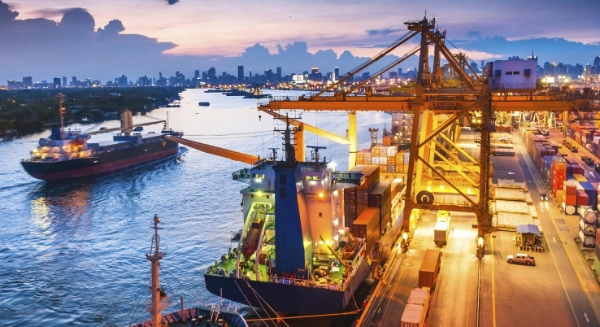
The trade balance showed a deficit of $4.25 billion in the first half of April.
Preliminary reports from the Vietnam Customs Department indicate that in the first half of April 2026 (from April 1-15), the total value of domestic import and export goods reached approximately US$47.37 billion, an increase of 14.89% compared to the first half of March 2026. By the end of the first half of April 2026, the total value of imports and exports reached US$297.06 billion, an increase of 22.83% compared to the same period in 2025.
Looking specifically at exports, the total export value in the first half of April 2026 reached approximately US$21.56 billion, an increase of 5.94% compared to the first half of March, bringing the cumulative export value to US$144.58 billion, an increase of 20.86% compared to the same period last year. Although the increase was not exceptionally dramatic, the export structure showed notable shifts among different product groups.
The processed and manufactured industrial goods sector continues to play a dominant role in the export structure, with many items produced on a large scale.
Of these, computers, electronic products and components continued to lead with a turnover of approximately $5.81 billion, an increase of 3.92% compared to the previous period. Second place went to machinery, equipment, tools and spare parts, reaching $2.81 billion, a sharp increase of 19.8%, indicating that demand from partner markets remains high.
However, the divergence within the high-tech sector is becoming increasingly evident. Mobile phones and components, one of the key export items, recorded a sharp decline of 28.78%.
Given the large scale of trade, this decline has significantly slowed the overall growth rate of the entire high-tech sector; it also reflects the fact that global market demand for consumer electronics products has not yet recovered steadily.
In the first half of April 2026, this sector achieved a turnover of approximately US$17.47 billion, an increase of 6.56% compared to the previous period and accounting for over 80% of total export turnover. While this increase is not exceptionally dramatic, it occurred in the context of only a slight increase in overall turnover, thus demonstrating that the FDI sector remains the main driving force maintaining overall growth momentum.
This development also highlights the significant dependence of Vietnam's exports on the foreign direct investment (FDI) sector, with most key products such as electronics, telephones, and machinery being driven by these businesses.
The fact that FDI sector exports continued to grow during the period shows that these businesses are maintaining stable production operations while effectively utilizing orders from international markets.
Therefore, any adjustments in the production strategy, supply chain, or consumer market of multinational corporations can directly and quickly impact Vietnam's export turnover.
In addition, several traditional and labor-intensive industrial product groups continued to maintain their growth momentum. Textiles reached approximately $1.37 billion, a slight increase of 0.75%, while footwear reached $1.02 billion, an increase of 25.31%.
However, the modest increase in textiles suggests that the recovery is not yet truly sustainable. The industry continues to face numerous pressures, such as competition from lower-cost countries like Bangladesh, as well as increasing demands for environmental standards and traceability.

Export turnover of some product groups in the first half of April 2026 and the first half of March 2026. Source: Customs Department.
Notably, the raw materials and minerals group recorded a surge in growth during the first half of April 2026, becoming one of the key factors driving overall export turnover.
Specifically, coal prices increased by 3,711.44%, crude oil prices increased by 540.03%, while gasoline prices surged by 8,252.77% compared to the first half of March.
The surge in the energy sector primarily reflects the impact of world market prices, amid ongoing geopolitical tensions in key oil-producing regions. Risks related to supply, shipping disruptions, and global energy price volatility have driven up export volumes in the short term.
This is a very rare increase compared to recent periods, indicating a significant shift in trade flows in the energy sector. Despite the high growth rate, in absolute terms, this is still a relatively small figure compared to total export turnover.
However, the increase in low-processed goods also temporarily shifts the export structure towards a less sustainable direction, due to the highly volatile nature and low added value of raw materials.
Specifically regarding imports, in the first half of April 2026, the total value of goods imported reached approximately US$25.81 billion, an increase of 23.61% compared to the first half of March. Cumulatively from the beginning of the year to mid-April, the import value reached US$152.48 billion, an increase of 28.83% compared to the same period last year.
Structurally, imports during the period continued to focus primarily on production materials and input materials, clearly reflecting Vietnam's role in the global production chain.
Notably, the group of computers, electronic products, and components reached a value of $9.34 billion, an increase of 11.48% compared to the previous period, and continued to be the largest import item. Following that were machinery, equipment, tools, and spare parts, reaching approximately $3.06 billion, a sharp increase of 35.72%, indicating that businesses are increasing their imports of equipment to expand or maintain production capacity.

Import turnover of some commodity groups in the first half of April 2026 and the first half of March 2026. Source: Customs Department.
Notably, the group of phones and components also recorded a 17.67% increase, reaching approximately $431.34 million, despite a sharp decline in exports of this product group during the same period. This reflects a lag in the electronics production chain, as FDI enterprises increased imports of components to prepare for the next production cycle.
The FDI sector continues to play a dominant role in import activities. During the period, this sector achieved a turnover of approximately US$18.61 billion, an increase of 23.25% compared to the previous period and accounting for about 72% of total import turnover. Not only do they dominate in terms of exports, but the FDI sector also holds a large portion of the input supply for production activities, from electronic components to machinery and equipment.
This dependence makes domestic supply chains more vulnerable to external fluctuations, while also reflecting the limitations of domestic supporting industries.
Amidst supply chain disruptions and geopolitical instability, the trend of increasing input inventories to ensure production schedules is becoming increasingly evident. The current increase in imports could signal a recovery in export orders in the coming periods.
Notably, the energy sector continued its strong growth momentum. Gasoline and other petroleum products reached a turnover of approximately $764.85 million, up 55.55%, while crude oil increased by 34.28% and liquefied natural gas by 28.34%.
This increase reflects not only the energy demand for production but also the impact of fluctuations in global energy prices amidst geopolitical tensions in oil-producing regions. Instabilities in supply and transportation costs have led businesses to increase imports to diversify their sources and ensure short-term energy security.
Overall, import and export figures for the first half of April 2026 are moving in two parallel directions: on the one hand, maintaining a foundation from the processing and manufacturing industries; on the other hand, being significantly impacted by fluctuations in the high-tech and energy sectors.
In the short term, if global market demand recovers and large corporations increase production, export turnover could improve rapidly. However, in the long term, heavy reliance on the FDI sector and a few key industries continues to be a challenge, requiring Vietnam to accelerate the diversification of its export structure and enhance the capacity of domestic enterprises to move towards more sustainable growth.

Source: Customs Department.
In the first half of April 2026, the trade balance was negative approximately US$4.25 billion, the highest level recorded for this period since the beginning of the year. Cumulatively from the beginning of the year, this deficit reached nearly US$7.9 billion. This indicates that import pressure for production is increasing faster than exports in the short term, necessitating close monitoring of trade developments in the coming months.
Source: vneconomy.vn