0975 721 441
 info@ailogisticsvn.com


Through e-commerce, Vietnamese goods can directly reach billions of consumers worldwide. Although cross-border export turnover currently stands at only $4.45 billion, this is a potential sales channel that businesses need to actively utilize...

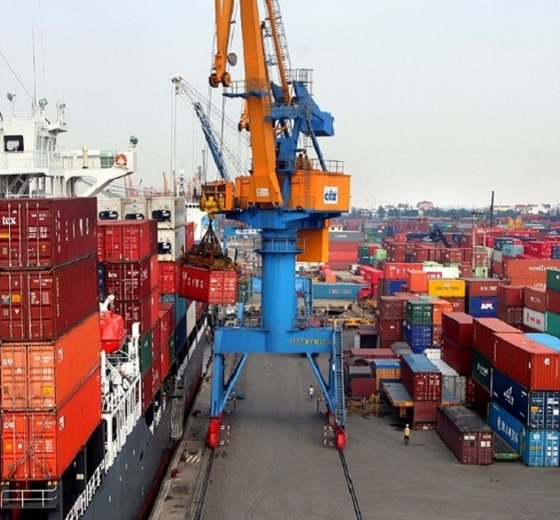
Through global e-commerce, businesses can reach billions of consumers. (Illustrative image.)
At the seminar "E-commerce Boosting Exports: Current Situation and Solutions" held on the afternoon of April 7, 2026, experts noted that e-commerce is no longer a supplementary sales channel but has become a transformative method of exporting.
Ms. Le Hoang Oanh, Director of the Department of E-commerce and Digital Economy (Ministry of Industry and Trade), emphasized the importance of e-commerce in four core aspects: expanding global markets; supporting small businesses without being limited by scale; optimizing costs from logistics to advertising; and unlocking the enormous market growth potential.
"While traditional exports only allow us to reach a limited number of customers, through global e-commerce, businesses can reach billions of consumers," Ms. Oanh affirmed.
ONLY FOCUS ON LARGE MARKETS
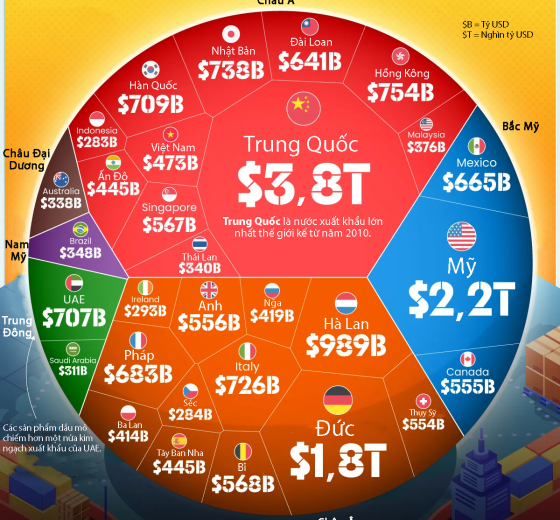
Looking back on 30 years of integration, Mr. Tran Thanh Hai, Deputy Director of the Import-Export Department (Ministry of Industry and Trade), outlined an impressive export roadmap. From a modest import-export turnover of 13 billion USD in 1995, this figure is projected to reach 930 billion USD by 2025, equivalent to approximately 70 times in 30 years, with exports exceeding 475 billion USD.

Mr. Tran Thanh Hai, Deputy Director of the Import-Export Department, shared this information at the workshop.
In this overall picture, cross-border e-commerce plays a crucial "catalyst". Currently, the total e-commerce market in Vietnam is worth approximately $31 billion, with the cross-border segment accounting for about $4.45 billion (equivalent to 15-16% of the total). Although the absolute value is still modest, the growth rate of 17-18% shows the enormous potential that businesses are actively leveraging.
Key markets such as the United States, China, and the European Union (EU) continue to be priority destinations. Specifically for e-commerce, the United States accounts for over 22% of Vietnam's online export sales. However, Mr. Hai also frankly pointed out limitations that need to be overcome.
E-commerce remains heavily focused on large markets such as China (especially for imports), the United States, and the EU. The majority of transactions rely on giants like Alibaba and Amazon. Domestic platforms, despite their efforts, primarily support exports to neighboring countries.
Similar to traditional exports, goods on e-commerce platforms are still primarily processed goods, lacking individual brands and having low added value. Cross-border logistics costs, including transportation, warehousing, and order fulfillment, remain a major challenge, especially for bulky items like furniture.
Cross-border exports lack a well-trained workforce to operate the platform, process payments, and manage strategies at a high level. Furthermore, legal risks and high-tech fraud (using AI) erode consumer confidence in the digital environment.
Sam Charlton, Director of Access Partnership, stated that businesses are facing burdens from frequently changing administrative procedures, complex VAT refund processes, and confusion in implementing electronic invoices. In addition, the shortage of specialized personnel to operate the platform and manage strategic planning at a high level is also a "bottleneck" that needs to be addressed.
On Amazon's side, Darren Ong, Director of Public Policy for Southeast Asia, shared that logistics has always been the most challenging problem.
Leverage technology and proactively participate in international trading platforms.
To promote exports through e-commerce, Ms. Le Hoang Oanh stated that the development of cross-border e-commerce is not just a sales channel but has become a strategic direction. Therefore, the Ministry of Finance and the State Bank of Vietnam have been preparing to issue documents to support the sustainable development of e-commerce.
"These are not just principles, but also rights and obligations to establish a legal framework and create a transparent environment for the development of cross-border e-commerce in accordance with international standards. In particular, there will be additional policies on customs, taxation, and consumer protection, alongside these policy documents, to create a solid legal foundation," Ms. Oanh emphasized.
The Ministry of Industry and Trade is also actively working to finalize the legal framework, with a focus on the Law on Electronic Transactions and the National E-commerce Development Master Plan for the period 2026-2030. Policies on customs, taxation, and consumer protection will be synchronized to create a transparent environment that meets international standards.

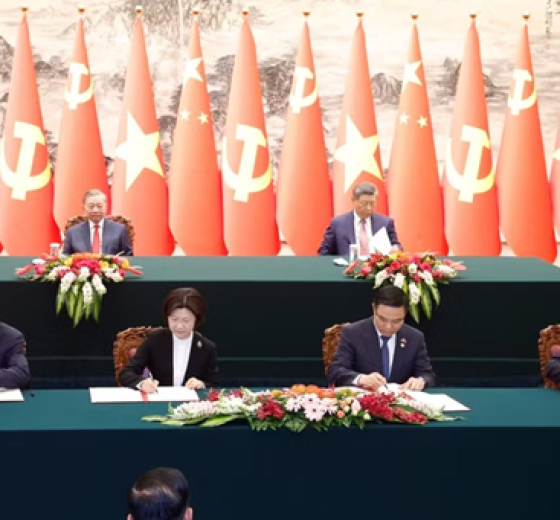
The guests participating in the panel discussion.
Besides support from the government, local authorities, and e-commerce platforms, Ms. Oanh recommends that businesses themselves must be self-aware and adhere to international standards. Businesses should invest systematically in standards to obtain international certifications. Furthermore, they need to enhance their competitiveness in digital management and apply digital technology in online sales activities.
Specifically, businesses should leverage technology and proactively participate in international e-commerce platforms. They should apply advanced technologies such as Big Data and AI to digital marketing and optimize operational processes. According to Ms. Oanh, platforms like Amazon, Shopee, TikTok Shop, and Lazada currently provide significant support to businesses, even on a one-on-one basis. However, the number of businesses that are genuinely interested in and partner with these platforms is still limited.
To overcome challenges related to standardization, logistics, payment, and fierce competition from goods from other countries, Mr. Tran Thanh Hai noted that businesses must produce goods that meet stringent requirements and are in line with the online consumption trends of foreign markets.
Simultaneously, promotional efforts should focus on building brand awareness in the digital environment. Leverage the power of KOLs/KOCs (key opinion leaders/key consumers) and social media platforms like TikTok for promotion. The government needs to expand markets through new-generation FTAs and improve the digital payment ecosystem.
In addition, establishing logistics centers abroad will optimize costs and increase the competitiveness of exports. “Why don’t Vietnamese businesses boldly establish and operate logistics centers in neighboring markets such as China, Laos, Cambodia, or Myanmar? This would help us be more proactive in bringing goods deeper into regional markets,” Mr. Hai questioned.
Source: vneconomy.vn